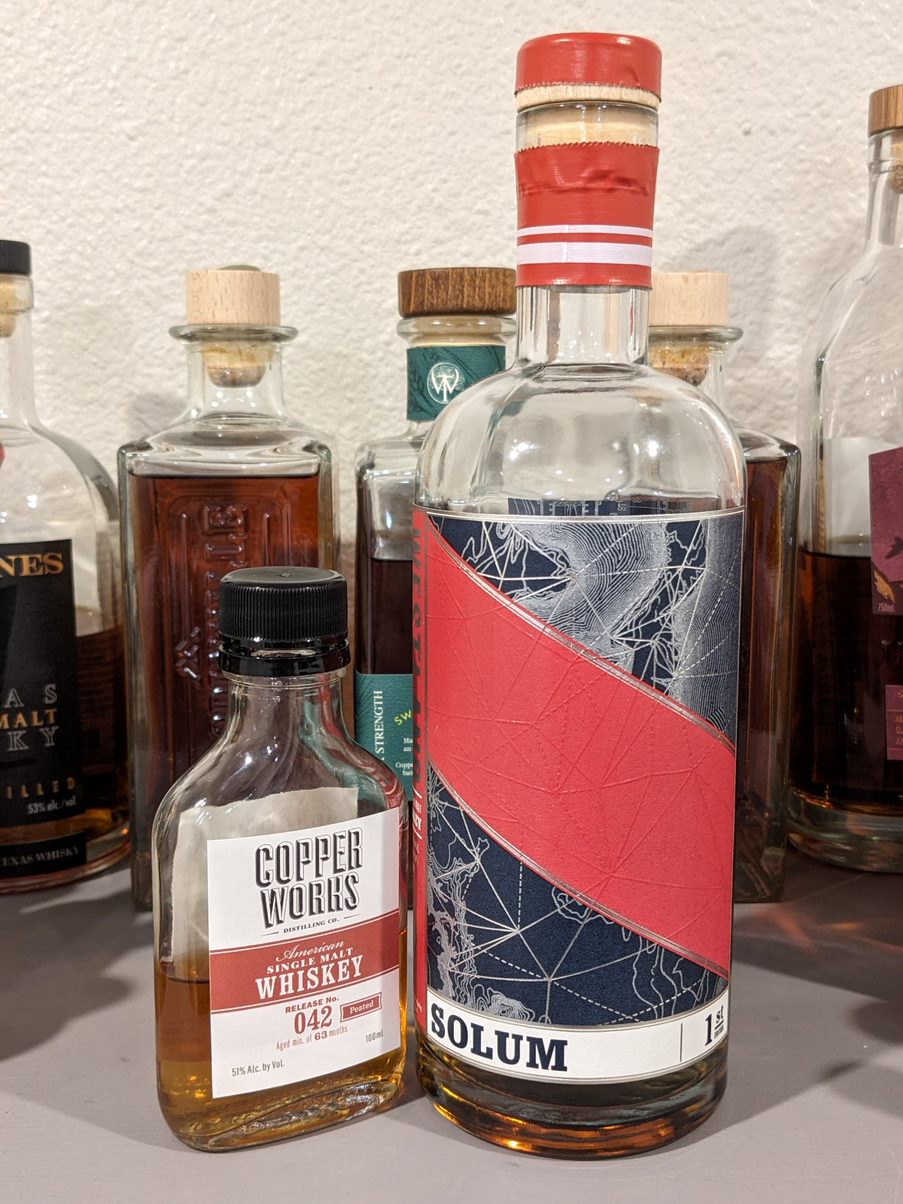
If you’re a fan of American Single Malt, you may have seen the news about the sudden closure of Skagit Valley Malting. If you’re like me, you may have looked on in concern and wondered to yourself what this means for the PNW distilleries which have been making use of the barley that was smoked with bona fide American peat from the Pacific Northwest that Skagit Valley Malting provided to Seattle area producers. Indeed, you may have wondered…
What This Means for American Peat
Skagit Valley Malting (SVM) was the first malting house that has ever provided malted barley which had been peat-smoked with American peat. As of its closure, SVM was, to my knowledge, still the singular provider of whiskey-grade peated malt peated with American peat. This Pacific Northwest (PNW) peat specifically comes from a bog in the Shelton area, south of the Hood Canal, out west of the Seattle area, as opposed to the Skagit Valley, which lies to the north. The Shelton-area peat bog is, of course, independent of Skagit Valley Malting, and could continue to be developed and used by another malting-house in the future.
Skagit Valley Malting provided some information about their peat-smoking process on their website: How We Make Peat Smoked Malt — Skagit Valley Malting (also archived in the Wayback Machine).
There are, of course, plenty of peated American Single Malts, like McCarthy’s Oregon Single Malt and Balcones Peated Texas Single Malt, which use Scottish peat-malted barley, imported from Scotland, already peat-smoked and ready to go. Additionally, that there are American malting-houses and distilleries malting their own barley with imported Scottish peat as well, for example, Andalusia Whiskey Co. in Central Texas. The use of American peat for peat-smoking malted barley was a new and highly significant development when Skagit Valley Malting started providing it, and as of the Copperworks and Westland releases of PNW-peated whiskey, it continues to be new, unique, and significant in the development of the category of American Single Malt Whiskey.
This news affects only the currently-very-small proportion of products from only two producers, Westland and Copperworks, which are using specifically PNW-peated malted barley in their products.
Westland and Skagit Valley Malting collaborated to locate the peat bog that would work well for flavoring malt. They then went on to develop the process for harvesting it, dehydrating it, and smoking malted barley with it. The details of the smoking process have been somewhat of a trade secret. Hopefully Westland is able to carry some of that industry knowledge on to a new malting-house with whom they will develop the next generation of Pacific Northwest Peat.
Westland and Copperworks both laid down peated malt in barrels around 2016 when the first viable batches of PNW-peated malt were distilled. Westland was the first into barrel, but Copperworks was technically the first to release a PNW-peated showcase whiskey in 2022, Copperworks Release 042. As Copperworks is sure to reiterate whenever talking about Release 042, despite a desire to let Westland be first to market with the peated malt they had developed, Copperworks felt the PNW-peated whiskey was properly matured and ready to release. Therefore, Copperworks first conferred with Westland, who gave Copperworks their blessing to release their PNW-peated product first.
Westland released their first edition of the “local peat” Solum series earlier this year, featuring the PNW-peated malt they have laid down since then. The release comes from a range of vintages as appropriate for building a balanced and representative flavor profile.
I’ve been meaning to review both of Copperworks Release 042 and Westland Solum Edition 1 releases but due to the subtlety of the peat flavor (in a good way!) it’s rather hard to compare them against each other or even other releases from the distilleries to get a clear idea of the PNW-peated flavor profile distinct from each distillery’s own style. That goes to show that both distilleries have done a great job of integrating the PNW peat profile such that it plays well with the distillery styles, acting as a subtle flavoring agent that suits the more typical American drinker’s palate, while conveying that oh-so-significant sense of place of the Pacific Northwest.
It’s well past time that I get reviews for those published and my palate has been in good shape lately, so look out for those reviews coming soon.
I was able to reach out to both Copperworks and Westland for comment on the Skagit Valley Closure.
Copperworks
Last Friday, November 3rd, Copperworks had their quarterly investor call over Zoom. I attended and asked how the Skagit Valley closure will affect their plans for peated whiskey going forward. At one point in time Copperworks had said that they would not continue with peated malt. However, with their recent expansions, plans for a new bottle form factor, plans for a new flagship release which will be a more consistent blend batch-to-batch, and the PNW sense of place, they did want to commit to using more PNW peat going forward. Originally, they would have planned to use Skagit Valley Malting for this PNW-peated malt, but obviously those plans will have to change. Copperworks is pursuing other options to partner with to provide peated malt. However, it’s important to note that they are not in a rush to locate a new peated-malt provider. Regardless of the timeline on which they locate another source of American-peated malt, Copperworks has plenty stock of aging whiskey in various malt styles, which feeds into plenty of other products they will continue to bring to market.
Westland
On the afternoon of Wednesday, November 8th, I visited Westland for a tour and interview with the new Master Distiller of Westland Distillery, Tyler Pederson. I’ll post a write-up of that visit soon, including more selected Q&A, and eventually there will be a transcript and a podcast with audio of that interview. (The DemiTastes podcast overall is still a work in progress, but coming soon.)
On this specific question:
What will Westland do now that the closure of Skagit Valley Malting has cut off their supply of malt peated with Skagit Valley peat?
To paraphrase, Pederson’s answer was along the lines of the following:
Westland has plenty of years of headway on Skagit Valley Malting’s peated malt which was laid down between the original development of Skagit Valley’s PNW-peated malt and the closure of Skagit Valley Malting. They are looking for a new partner for PNW-peated malt, but because there is plenty of peated malt in barrels already, Westland is not in a particular rush to replace its source of PNW-peated malt. Pederson feels they have a few years before lack of such a source would become concerning.
What’s Next for American Peat
It’s fair to say that neither Westland nor Copperworks is throwing in the towel on PNW peat. There are still barrels with PNW-peated whiskey at both distilleries, and at least a rough plan for future releases of PNW-peated whiskey from both. Assuming they can find another malting house — or even several! — to work with peated malt, there is a good chance that the Shelton peat bog will continue to provide its distinctive flavor to future peated malts from these distilleries, and perhaps other distilleries in the future. Once there are malting-houses handling peated malt, it would not be too much of a stretch to expect that Westland and its partners will be exploring the development of other peat bogs and their distinctive flavors as well.
It can be difficult to find a malting-house willing to work with peat smoke. Dealing with peated malt at malting-houses can be tricky because the smell of the burning bog lingers in the air, gets onto everything, and can be hard to clean thoroughly enough to return easily and quickly to the production of unpeated products, which are the majority of an American malting-house’s business. At distilleries and breweries which deal with both peated barley and other, decidedly not smoky, products, at least the “peat taint” can be confined to only certain pieces of equipment that are designed for working with already-smoked barley and its liquid and vapor products. A malting facility can be specialized to help deal with this problem, and most businesses can tolerate a certain amount of hassle, as long as the volume of business is significant enough and the price is right.
Now that both Copperworks and Westland have releases on the market showcasing American peat, the market has seen that the results can be quite delicious, and that arguably makes it worth the investment in developing American peat bogs for whiskey flavor — and make no mistake, there are plenty to choose from — as well as the facilities and techniques capable of smoking the barley for whiskey production. There’s a good chance that other American Single Malt distilleries could find themselves interested in partnering with malting-houses across the United States to develop their own local peat resources and American-peated malt.
Consumers may want to brace themselves to see more expensive American-peated whiskeys if the cost to develop and operate the facilities producing peated malt drives the price of that American-peated malt higher.
We may even eventually see experimental American-peated bourbon releases. And what could be more quintessentially American than taking a time-honored world tradition and integrating it into a purely American product, made from all American resources?
Note: This article has been edited to clarify that the actual source of Pacific Northwest Peat for Skagit Valley Malting was from the Shelton area on the south end of the Hood Canal, west of Seattle, instead of the Skagit Valley, which lies to the north of Seattle, and updates some terminology to avoid confusion.


 Demi Tastes Whiskey